
Childhood is weird, isn’t it? Weird in a good way: weird in that the world is more full of wonder than at any other time in our life. As we age, depending on our cast of mind, we view this openness as something silly, and rightly confined to the past, or else envy young children that sense of acceptance. Kids don’t believe ghosts exist – they accept that they exist. Of course they exist.
In previous First Frights I’ve looked at the formative TV shows and films that filled me with a delicious, addictive sense of dread and awe. But what were the first books that stirred and fed on those feelings? I can identify two plausible candidates, one of which may be well-known to visitors to the Gyre.
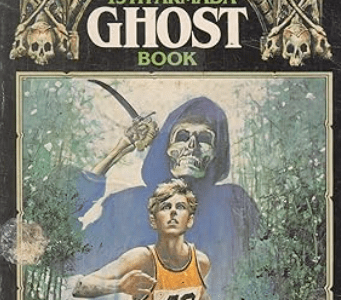
When I was nine or so, I bought The 15th Armada Ghost Book (ed. Mary Danby, 1983), probably from whatever the book club at school was called (The Chip Club? The Lucky Club? I forget). I hadn’t, and still haven’t heard of the majority of the writers whose short stories it anthologises. Nor, for whatever reason, did I then seek out the previous fourteen – or any subsequent – volumes of the series.
There are ten stories, of which a few haunted me and to which I returned, like a tongue probing at a loose tooth. Of the others, one or two may have struck a nerve but the rest I probably read and forgot. That’s curious, because among the latter is ‘Who’s a Pretty Boy Then?’ by Jan Mark, author of my favourite children’s book Thunder and Lightnings. In this story, Rachel’s Dad builds an aviary in the garden to cover a curious patch that nothing ever grows on. Determined to raise his budgerigars in a dignified way, he forbids anyone in the family from teaching them to speak, yet they soon begin to talk: or at least, something finds voice through them. There’s humour and warmth in this story, but there’s also something really creepy about a budgie saying “I shall always be very cold.” Brr.
Elsewhere – though the name would have meant nothing to me at the time – there’s ‘The Patchwork Quilt’ by August Derleth, who I’ve written about before in connection with H.P. Lovecraft. There’s no Cthulhoid tentacles here, just a very cold girl who finds someone – or something – tucking her in at night to keep her warm. Josh Kirby’s immediately identifiable drawings illustrate – with a deliciously creepy sense of atmosphere – several of the stories, including this one.
Also enjoyable was ‘Whoever Heard of a Haunted Lift?’ by Alan W Lear. This is properly modern, set in a 60s housing block that’s already decaying, and has pop-culture references to the likes of The Beatles, T. Rex and The Kinks. Colin finds himself trapped in a faulty lift, in which asthmatic Billy Ross suffocated years before. There’s a neat twist at the end, as in several of the others, and Colin’s narrative voice is more Grange Hill than M.R. James which would have made it an easier read than some of the more obviously ‘classic’-style tales on offer.
But my favourite story was – and, on a re-read this week while laid up ill in bed, remains – ‘The Sound of Sirens’ by Tony Richards. It’s a timeslip tale, in which schoolboy Robin meets the pale, unusual Joey, and together they play in Robin’s hideout. Each boy, though, soon discovers that their cultural touchstones mean nothing to the other, and Robin begins to suspect something is amiss. The new Thames Flood Barrier has been tested, and the sirens announcing that, as if triggering memories of the last major threat to the city, have opened a path into Blitz-era London, which to his horror Robin finds becoming more and more real. This story terrified the younger me, and even now ‘The small boy cast no shadow. None at all’ sends a shiver up my spine. There’s a poignancy as Joey, unlike Robin utterly ignorant of the fate awaiting him, parts with tears in his eyes, and goes to meet a doom that’s 43 years in the past.
1983 is now 41 years ago, almost as far from us as the Blitz was from the early 80s: that’s as frightening to me as anything in the book.
The other volume that cast a spell at the time was, of course, The World of the Unknown: All About Ghosts by Christopher Maynard. Or, in common shorthand, Usborne’s Ghosts.
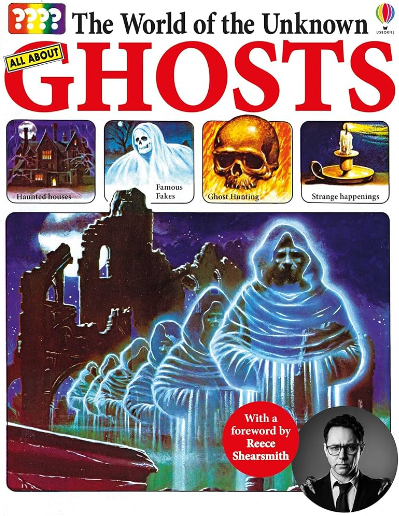
I was delighted to see this resurrected in 2019 with a bonus foreword by Reece Shearsmith. The inside rear cover also has quotes from fans who lobbied for its reprinting, and a common theme therein is the mixture of dread and delight that made getting this book out of the library (did nobody own a copy themselves? I know it was the library copy I borrowed time and again) a terrifying pleasure.
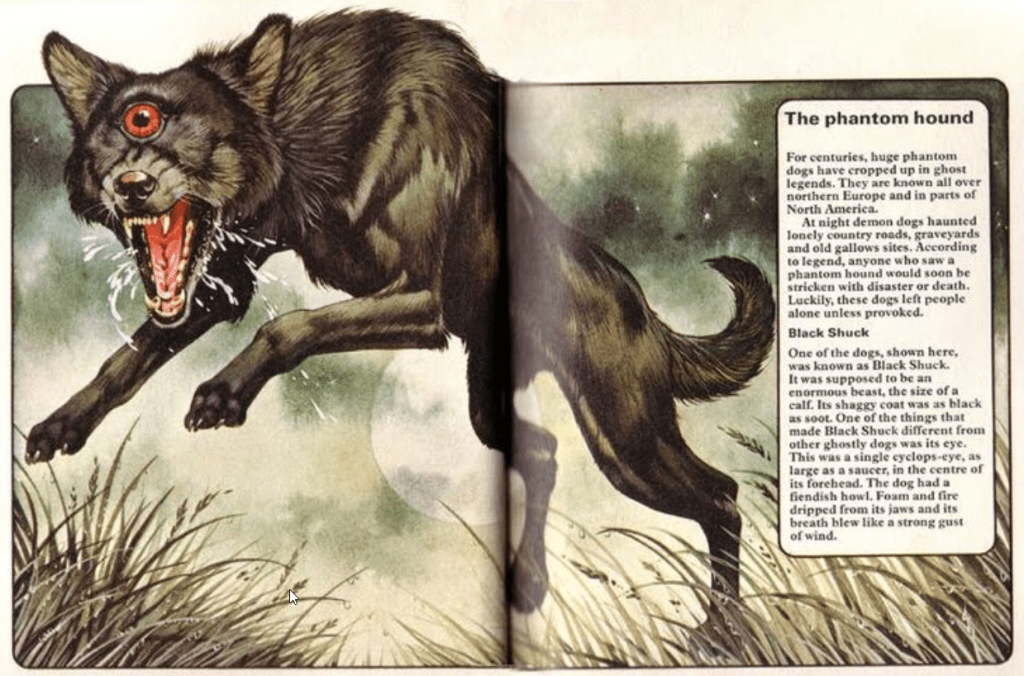
Everyone familiar with this book will have their own particular ‘favourite’ part. The illustration of the fierce, one-eyed Black Shuck was the page I had to always skip over and even now the wrongness of the image (that eye!) still freaks me out:
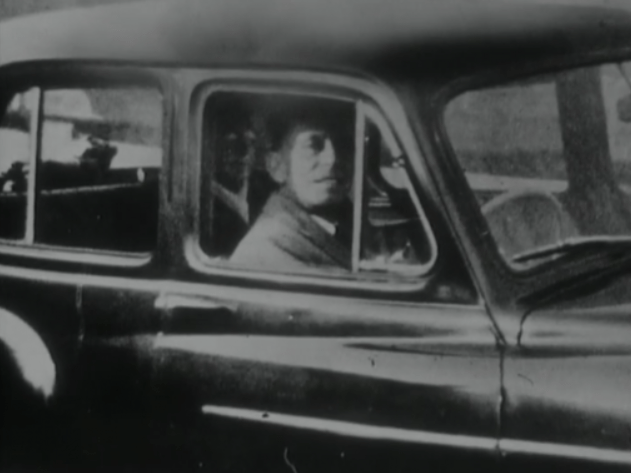
The map of Pluckley – England’s most haunted village – immediately marked it out as a place I never ever wanted to go to, yet found fascinating from a safe distance. But what lingered – and what was delved into more deeply in later years in the partwork Unexplained – were the mystery photographs. You know them: the shrouded figure (The Brown Lady) on the Raynham Hall stairs, the Spectre of Newby Church and most terrifying – because most everyday – the photo by Mabel Chinnery of her husband in his car, with the apparently spectral figure of her dead mother in the back seat.
Have I ever seen a ghost? No. But: around this time two things happened that would only have affirmed the sense that there were unexplained things in the world. One (I’ve mentioned it before) was while walking up the High Street on my way back from my friend Alistair’s birthday party. There was a certain house – the Back Manse, known to kids as “The Bad Man’s” – which for many years stood desolate near the foot of the street. You couldn’t get in – and even as kids we didn’t dare try. But that day, my veins no doubt running heavy with pure sugar, I saw a face in the top-right-hand window.
It was a man, with wild hair and (this could be memory playing tricks) an eye-patch. Honestly. And he was laughing, and looking right at me. And, reader, I swooned. No doubt some blood sugar explosion was to blame, but I got headspin and felt all faint and dizzy, and when I looked back the man had gone. And then I continued on my way back home. Didn’t run, didn’t mention it when I got in. Just a random, utterly inexplicable weird event plonked down in the middle of the day, as happens, and you move on.
Similarly, I suppose, one night, looking out my bedroom window I saw what I much later learned must be ball lightning: a silent globe of flickering light that ran along the low rooftops of the houses our flat overlooked. And, as far as I recall, I didn’t go tearing down the stairs to tell my parents. What would have been the point?
Childhood is weird, isn’t it?

 Into the Gyre
I doubt I’ll ever have reading experiences like I had as a kid – Usborne also made a great Detective’s Handbook as well as a Spy’s Handbook both illustrated by Colin King. Really intrigued to have a look at some of the stories listed. Keep up the good work!
LikeLike
I think I remember those! Pretty sure I learned how to make a watermark on a piece of paper from one of those books. Vital life skill.
LikeLiked by 1 person