The mapping problem

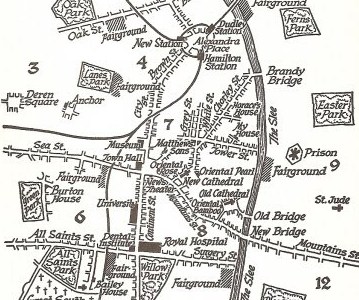
I've written about maps in fantasy fiction before. For every reader who enthuses and pores over a double-page spread of spidery waterways and jagged mountain ranges, there's another whose heart sinks at the OCD-level of detail, the neatness of it, the aura of omniscience. I'm currently reading "Passing Time" (l'emploi du temps) by Michel Butor. … Continue reading The mapping problem

Progress

Happy New Year. I don't tend to write much over Christmas; I always find it a time for generating new ideas or doing the writing-tasks-that-aren't-writing, like submissions or editing or planning. And looking back at old stuff to see if it can be resurrected (a fun task, but the answer is always "no"). Consequently, the … Continue reading Progress

The mutation of an idea

We moved from Edinburgh to Peterborough in January 2000. At that point, my sole experience of the Soke had been a trip a few weeks before, to find a place to live, and as a stop on the East Coast railway line. The landscape around the town was a revelation, even when just viewed from … Continue reading The mutation of an idea

Priorities

I have four writing priorities at the moment. They are, in no particular order (and that's the problem): this blog and my duty to you, dear reader unfinished fantasy novel, 185 MS pages after 3 years' work pro-cycling-themed gamebook, 1st draft completed, needs reworked Robin Hood novel, completed 3 years ago and redrafted, and submitted … Continue reading Priorities

In praise of brevity: Clive Barker’s “Cabal” and the anti-epic

Clive Barker’s 1988 novel Cabal is short: at 253 pages, padded out by chapter breaks and illustrations, it’s practically a novella. After the effort of writing the 700-odd pages of Weaveworld, this was a refreshing length for the author: "One of the interesting things about going to Cabal after [Weaveworld] was that I found a … Continue reading In praise of brevity: Clive Barker’s “Cabal” and the anti-epic

Relocated in translation: “HEX” by Thomas Olde Heuvelt

Moving the action of a European or Asian film to America when Hollywood remakes it is not unusual. Moving the location of a European novel to America when translated into English, however, is. Published in English in 2016, HEX is the story of the small New England town (where have we heard this before?) of … Continue reading Relocated in translation: “HEX” by Thomas Olde Heuvelt

21st century pseudonyms, or “furthermore known as the JAMMs”

On 23rd August, Faber will publish "2023: A Trilogy" by the Justified Ancients of Mu Mu. Written by (I am assuming) Bill Drummond and Jimmy Cauty, whose best-known guise is The KLF, the publication date will mark exactly 23 years to the day since the pair set fire to a million pounds in a disused … Continue reading 21st century pseudonyms, or “furthermore known as the JAMMs”

After the Factory

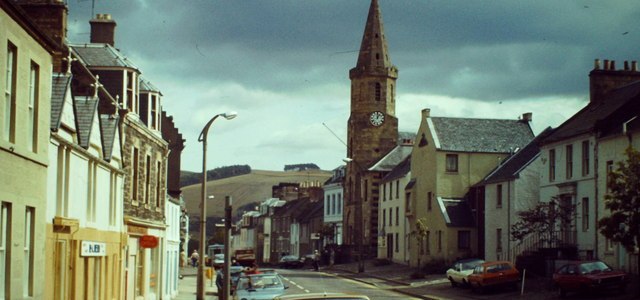
(This post is an unpublished piece I wrote over a decade ago, about the village in Fife where I grew up. A few details have since been updated, but on re-reading I can't believe I didn't mention the huge hill figure of a bear above Parkhill which was carved - the lines set alight to … Continue reading After the Factory

L’année dernière à Manderley

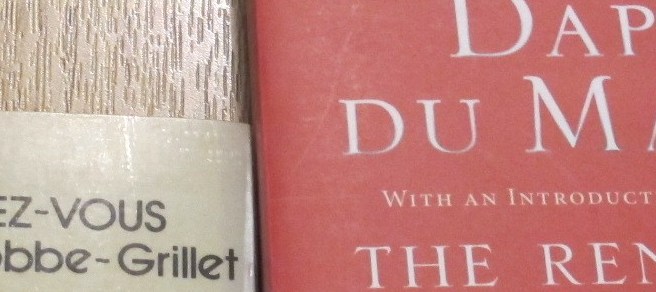
I’ve long wanted to read – or to write, and I’ve tried1 – something which marries the claustrophobic atmosphere of Daphne du Maurier’s short stories (such as ‘The Birds’ and ‘Don’t Look Now’ obviously, and also ‘The Blue Lenses’), with the formal experimentation of French nouveau-romaniste Alain Robbe-Grillet (1922-2008). Although they both published some of … Continue reading L’année dernière à Manderley

Under the influence

The artist John Wells was a member of the so-called “St. Ives” group, a loose collective of artists active from the late 1930s to the 1970s. None of the artists in question necessarily thought of themselves as part of a group, and their often fractious relationships makes for great reading. The most illustrious members were … Continue reading Under the influence